EN
EN


Selecting the right herbal toothpaste requires careful evaluation of multiple product attributes that directly impact oral health outcomes, user experience, and long-term dental wellness. Unlike conventional synthetic formulations, herbal toothpaste relies on plant-based active ingredients, botanical extracts, and natural mineral compounds to deliver cleaning efficacy, antimicrobial protection, and therapeutic benefits. The decision-making process involves assessing ingredient quality, formulation integrity, clinical support, manufacturing standards, and alignment with specific oral health needs. Understanding which factors genuinely influence performance versus marketing claims empowers consumers and procurement professionals to make informed choices that balance efficacy, safety, and value in both personal and institutional purchasing contexts.
The herbal toothpaste category has evolved significantly from early natural product experiments into a sophisticated segment backed by phytochemical research, standardized extraction methods, and formulation science. Modern herbal toothpaste products incorporate evidence-based botanical actives while maintaining natural ingredient profiles that appeal to health-conscious consumers seeking alternatives to synthetic additives. However, the proliferation of products labeled as natural or herbal has created selection complexity, making it essential to identify objective criteria that distinguish genuinely effective formulations from those relying primarily on green marketing narratives. This comprehensive examination explores the critical selection factors that determine herbal toothpaste quality, performance reliability, and suitability for diverse oral care requirements across consumer segments and institutional applications.
The therapeutic effectiveness of herbal toothpaste depends fundamentally on the concentration and bioavailability of active phytochemicals derived from botanical sources. Premium formulations utilize standardized plant extracts with documented active compound profiles rather than simple ground herbs or unstandardized preparations. For example, neem extract standardized to contain specific concentrations of azadirachtin and nimbidin delivers consistent antimicrobial activity, while non-standardized neem powder provides variable and often insufficient active compound levels. The extraction methodology—whether supercritical CO2 extraction, hydro-alcoholic extraction, or steam distillation—significantly influences the preservation of heat-sensitive bioactive compounds and the removal of potentially irritating plant components.
When evaluating herbal toothpaste options, procurement professionals should request certificates of analysis documenting phytochemical standardization, extraction solvent residue testing, and microbial contamination screening. High-quality manufacturers provide transparent documentation of botanical source material origin, harvest timing that corresponds to peak phytochemical content, and post-extraction stability testing. The difference between crude botanical powders and properly extracted, standardized herbal actives can represent a five to tenfold variation in therapeutic potency, directly impacting the product's ability to deliver claimed oral health benefits.
Effective herbal toothpaste formulations typically incorporate multiple complementary botanical ingredients that address different aspects of oral health through synergistic mechanisms. A well-designed product might combine antibacterial herbs like clove and tea tree oil with anti-inflammatory botanicals such as chamomile and calendula, alongside remineralizing agents like bamboo silica or calcium-rich herbal sources. This multi-botanical approach provides broader spectrum activity than single-herb formulations, addressing bacterial control, gum inflammation, enamel protection, and soft tissue healing simultaneously.
The selection criterion here involves assessing whether the botanical combination reflects evidence-based complementary actions or merely represents a lengthy ingredient list designed for marketing appeal. Quality herbal toothpaste formulations typically feature five to twelve carefully selected botanicals, each serving a specific functional role supported by traditional use patterns or contemporary research. Formulations containing twenty or more botanical ingredients often sacrifice effective concentrations of key actives in favor of label appeal, resulting in subtherapeutic levels of multiple ingredients rather than efficacious amounts of targeted botanicals.
The geographic origin, cultivation methods, and supply chain integrity of botanical ingredients significantly impact both the phytochemical profile and ethical considerations of herbal toothpaste products. Wild-harvested botanicals from biodiverse regions may offer superior phytochemical complexity compared to monoculture-grown alternatives, yet sustainability concerns arise when popular herbs face overharvesting pressure. Organic certification provides assurance regarding pesticide residues and sustainable agricultural practices, particularly important for herbs like peppermint, spearmint, and chamomile that may accumulate agricultural chemicals when conventionally grown.
Discriminating buyers should inquire about botanical sourcing practices, including whether manufacturers maintain direct relationships with growers, conduct on-site quality audits, and implement fair trade practices that support sustainable harvesting communities. Traceability documentation that connects finished herbal toothpaste batches to specific botanical harvests provides quality assurance and enables rapid response if contamination issues arise. These sourcing factors become particularly relevant for institutional purchasers seeking to align procurement decisions with corporate sustainability commitments or ethical sourcing policies.
The cleaning efficacy of herbal toothpaste relies on carefully calibrated abrasive particles that remove plaque biofilm and surface stains without damaging tooth enamel or exposed dentin. Natural abrasive options include calcium carbonate, silica derived from bamboo or diatomaceous earth, and baking sodium bicarbonate, each offering distinct particle size distributions and hardness characteristics. The Relative Dentin Abrasivity (RDA) value provides a standardized measure of abrasive potential, with values between 70 and 120 considered appropriate for daily use, while values exceeding 150 risk accelerated enamel wear over time.
Herbal toothpaste formulations targeting sensitive teeth typically employ finer particle abrasives with RDA values below 80, while whitening-oriented products may approach the 120 threshold to enhance stain removal. The selection factor involves matching abrasivity levels to user needs and existing oral health conditions. Individuals with enamel erosion, exposed root surfaces, or dental restorations benefit from low-abrasivity herbal toothpaste formulations that prioritize gentleness over aggressive cleaning. Manufacturers providing documented RDA testing demonstrate commitment to evidence-based formulation rather than relying solely on subjective cleaning claims.
The physical texture and flow properties of herbal toothpaste significantly influence user experience, dispensing consistency, and effective distribution across tooth surfaces during brushing. Natural thickening agents like xanthan gum, carrageenan derived from seaweed, or cellulose gum create the semi-solid texture consumers expect while maintaining stability across temperature variations and storage durations. Poorly formulated herbal toothpaste may exhibit phase separation, where aqueous and oil-based components segregate, or excessive thickness that makes thorough brushing difficult.
Quality formulations maintain consistent rheological properties throughout the product shelf life, with smooth extrusion from tubes and appropriate foam generation during brushing. The foam characteristics in herbal toothpaste differ from conventional products containing sodium lauryl sulfate, as natural surfactants like coconut-derived saponins produce less voluminous but adequate foam for distributing active ingredients. Selection criteria should include assessment of texture consistency, ease of application, and whether the product maintains homogeneity after extended storage or exposure to temperature variations common in bathroom environments.
The pH level of herbal toothpaste influences its impact on oral acid-base balance, enamel remineralization potential, and effects on the oral microbiome ecosystem. Optimal formulations maintain pH values between 7.0 and 8.5, providing mild alkalinity that helps neutralize dietary acids while supporting remineralization processes without causing soft tissue irritation. Some herbal toothpaste products incorporate pH-buffering botanicals like licorice root or mineral compounds that provide sustained alkaline conditioning beyond the immediate brushing period.
Emerging research on oral microbiome health suggests that overly aggressive antimicrobial approaches may disrupt beneficial bacterial populations alongside pathogenic species. Premium herbal toothpaste formulations increasingly focus on selective antimicrobial activity targeting cariogenic and periodontopathic bacteria while preserving commensal species that contribute to oral health. Selection factors related to pH and microbiome impact require understanding whether the product takes a broad-spectrum antimicrobial approach or employs more nuanced botanical combinations that support microbiome balance. This consideration becomes particularly relevant for individuals experiencing recurrent oral health issues despite consistent hygiene practices, suggesting possible microbiome disruption from excessively harsh oral care products.
The credibility of herbal toothpaste claims depends substantially on the existence and quality of clinical research supporting the efficacy of included botanical ingredients. Well-researched herbs like neem, clove, tea tree oil, and green tea extract benefit from multiple peer-reviewed studies documenting antimicrobial activity, anti-inflammatory effects, and clinical outcomes in oral health applications. The presence of such evidence differentiates products formulated based on scientific understanding from those relying primarily on traditional use claims or marketing narratives without empirical support.
Critical evaluation involves distinguishing between in vitro studies showing antimicrobial activity in laboratory settings and clinical trials demonstrating actual improvements in oral health parameters like plaque index, gingival bleeding, or pocket depth measurements. High-quality herbal toothpaste manufacturers reference specific clinical studies in technical documentation and base formulation concentrations on levels shown effective in research contexts. The selection criterion here involves requesting and reviewing clinical evidence summaries, assessing study quality and relevance, and determining whether botanical ingredient concentrations in the product align with efficacious levels established through research.
Independent comparative testing provides objective assessment of how specific herbal toothpaste products perform against established benchmarks or competing formulations. Standardized test methods evaluate plaque removal efficiency, stain reduction capability, antimicrobial activity against oral pathogens, and abrasivity characteristics under controlled conditions. Products supported by third-party testing data offer greater performance assurance than those relying solely on manufacturer claims or subjective testimonials.
Institutional buyers and dental professionals selecting herbal toothpaste for recommendation or distribution should prioritize products with documented performance testing conducted by independent laboratories using recognized methodologies. The absence of such testing does not necessarily indicate inferior products but does increase uncertainty regarding actual performance relative to claims. Manufacturers confident in their formulation quality typically invest in comparative testing and make results available to professional buyers, while those avoiding independent verification may indicate formulation limitations or performance gaps relative to marketing positioning.
While herbal ingredients generally present favorable safety profiles, comprehensive evaluation requires attention to potential sensitization reactions, cumulative exposure effects, and tolerability across diverse user populations. Some botanical constituents like essential oils can trigger allergic responses in susceptible individuals, while others may cause temporary taste alterations or mucosal irritation at higher concentrations. Quality manufacturers conduct safety assessments including dermal sensitization testing, oral tissue compatibility evaluation, and stability testing to ensure botanical actives remain within safe concentration ranges throughout product shelf life.
Selection factors related to safety include reviewing available toxicological data, checking for allergen declarations that identify potentially sensitizing botanicals, and assessing whether formulations avoid ingredients with known safety concerns. Herbal toothpaste intended for pediatric use requires particularly rigorous safety documentation, as children's developing systems may respond differently to certain botanical compounds. The presence of comprehensive safety documentation, appropriate warning labels for known allergens, and transparent ingredient disclosure demonstrates manufacturer commitment to consumer protection beyond minimum regulatory compliance.
The manufacturing environment and quality management systems under which herbal toothpaste is produced significantly impact product consistency, contamination risk, and regulatory compliance. Facilities operating under Good Manufacturing Practices (GMP) certification, ISO 22716 cosmetic manufacturing standards, or equivalent quality management systems demonstrate systematic approaches to contamination control, batch consistency, and traceability. These certifications require documented standard operating procedures, environmental monitoring, equipment validation, and personnel training programs that collectively minimize quality variation and safety risks.
Buyers evaluating herbal toothpaste suppliers should request facility certification documentation, audit reports from regulatory bodies or third-party certification organizations, and evidence of compliance with relevant manufacturing regulations in target markets. Manufacturers producing herbal toothpaste in certified facilities typically provide certificates of analysis for each batch, documenting microbial testing, heavy metal screening, and confirmation of active ingredient concentrations. This documentation enables purchasers to verify that products meet specifications and comply with import regulations when sourcing internationally.
Natural and botanical ingredients present formulation stability challenges compared to fully synthetic systems, as plant-derived compounds may undergo oxidation, hydrolysis, or microbial degradation over time. Quality herbal toothpaste formulations incorporate appropriate natural preservatives, antioxidants, and stabilizing agents that maintain product integrity throughout the declared shelf life without relying on controversial synthetic preservatives like parabens or formaldehyde-releasing compounds. Stability testing protocols evaluate physical properties, microbial stability, and active ingredient potency at various temperature and humidity conditions over extended periods.
Selection criteria should include reviewing stability testing documentation that confirms the product maintains specification parameters for at least eighteen to twenty-four months under typical storage conditions. Herbal toothpaste products lacking adequate stability may exhibit color changes, odor development, texture alterations, or reduced antimicrobial efficacy as botanical actives degrade. Manufacturers providing stability data and clearly marked production dates and expiration dates enable informed purchasing decisions and appropriate inventory management to ensure users receive products at peak efficacy.
The aqueous base and natural ingredients in herbal toothpaste create potential for microbial contamination if preservation systems prove inadequate or manufacturing hygiene lapses occur. While many botanical ingredients possess inherent antimicrobial properties, these do not always provide sufficient broad-spectrum preservation to prevent contamination by bacteria, yeasts, or molds throughout distribution and consumer use. Effective preservation systems in herbal toothpaste typically combine multiple natural antimicrobial agents at concentrations that inhibit microbial growth without causing oral tissue irritation or compromising product claims regarding natural composition.
Quality assurance testing should include challenge testing that exposes formulations to common contaminants to verify preservation system adequacy, along with routine microbial testing of finished products. Buyers should request microbial specifications and test results demonstrating compliance with cosmetic product microbial limits established by regulatory authorities. Herbal toothpaste contamination incidents, while relatively rare, can cause serious health consequences and damage brand reputation, making robust microbial control systems a critical selection factor for institutional purchasers and distributors responsible for product safety.
Different herbal toothpaste formulations address distinct oral health priorities through specific botanical combinations and functional ingredient emphases. Products targeting gum health typically feature anti-inflammatory botanicals like chamomile, calendula, and myrrh alongside astringent herbs that support tissue integrity. Formulations addressing tooth sensitivity incorporate potassium-based compounds or herbal extracts that modulate nerve response, while cavity prevention formulas emphasize antimicrobial botanicals effective against cariogenic bacteria and may include natural fluoride alternatives like hydroxyapatite or calcium-phosphate compounds.
The selection process requires matching product formulation focus to primary user needs or institutional population characteristics. Dental clinics recommending herbal toothpaste to patients with specific conditions should select products formulated to address those conditions rather than generic herbal options. Similarly, corporate wellness programs or hospitality operations selecting herbal toothpaste for distribution benefit from understanding user population oral health priorities and choosing formulations aligned with common needs. This targeted approach maximizes the practical benefits users derive from switching to herbal toothpaste compared to selecting products based solely on general natural product preferences.
Herbal toothpaste formulations designed for pediatric use require modified abrasivity levels, adjusted flavor profiles to encourage consistent use, and careful selection of botanical ingredients appropriate for children's physiology. Essential oils that adults tolerate well may prove too intense for young children, while certain botanicals contraindicated during pregnancy or for individuals with specific health conditions require appropriate warning labels and usage guidance. Products intended for elderly users may emphasize gum health support and gentle cleaning suitable for individuals with recession-exposed root surfaces or dental prosthetics.
Selection factors include verifying age-appropriate formulation design, reviewing contraindication warnings, and assessing whether flavor and texture characteristics suit intended user populations. Institutional purchasers supplying diverse populations may need multiple herbal toothpaste variants to appropriately serve different demographic segments. Healthcare facilities selecting herbal toothpaste for patient use should particularly scrutinize ingredient safety profiles and potential interactions with medical conditions or medications common in their patient populations.
Beyond functional performance, herbal toothpaste selection increasingly involves alignment with user values regarding environmental impact, animal welfare, ingredient sourcing ethics, and corporate responsibility. Certifications like vegan verification, cruelty-free status, organic ingredient certification, and carbon-neutral production provide documented assurance of specific value commitments. Packaging choices, including recyclable materials, reduced plastic content, or refillable systems, address environmental concerns that influence purchasing decisions for values-driven consumers and organizations.
For corporate procurement, hospitality operations, or retail buyers, understanding target customer values enables selection of herbal toothpaste products that resonate with user priorities beyond basic functionality. Products offering transparent supply chain information, fair trade certification for botanical ingredients, or documented social responsibility initiatives provide differentiation in competitive markets where multiple products offer similar functional performance. This values-alignment factor has become increasingly significant as consumers and institutional buyers incorporate ethical and environmental considerations into purchasing criteria alongside traditional quality and performance assessment.
Effective herbal toothpaste typically contains botanical extracts at concentrations between 0.5 and 5 percent depending on the specific herb and its potency. Standardized extracts with documented phytochemical profiles deliver consistent therapeutic effects at lower percentages compared to crude botanical powders. For example, neem extract standardized to contain specific azadirachtin concentrations may provide antimicrobial benefits at 1 to 2 percent, while non-standardized neem powder might require 5 percent or higher to achieve comparable effects. Quality manufacturers provide certificates of analysis documenting actual botanical active concentrations rather than simply listing herbs in ingredient declarations. The concentration must balance efficacy with safety and tolerability, as some potent botanical compounds can cause tissue irritation at excessive levels.
Herbal toothpaste addresses cavity prevention through antimicrobial botanicals that reduce cariogenic bacteria populations and alkaline-promoting ingredients that support enamel remineralization, while fluoride toothpaste directly enhances enamel fluorapatite formation and acid resistance. Clinical evidence supporting fluoride's anticavity efficacy is extensive and robust, while herbal approaches show promising results but generally have less comprehensive long-term clinical documentation. Some advanced herbal toothpaste formulations incorporate natural remineralizing compounds like hydroxyapatite or calcium-phosphate complexes that provide enamel-strengthening benefits through mechanisms different from fluoride. For individuals specifically seeking fluoride-free options due to personal preferences or fluoride sensitivity, high-quality herbal toothpaste with documented antimicrobial efficacy and remineralizing ingredients offers a viable alternative, though users should maintain appropriate dental monitoring and may benefit from supplementary preventive measures.
Certain botanical ingredients in herbal toothpaste can trigger allergic responses in susceptible individuals, particularly essential oils like peppermint, cinnamon, tea tree, and clove that are common oral sensitizers. People with known plant allergies should carefully review ingredient lists for botanical families associated with their sensitivities, as cross-reactivity can occur between related plant species. Quality manufacturers conduct sensitization testing and include appropriate allergen warnings on product labels. Initial reactions to herbal toothpaste typically manifest as mild oral tissue irritation, burning sensations, or temporary taste alterations that resolve upon discontinuation. Severe allergic reactions are rare but possible, particularly with products containing multiple essential oils at high concentrations. Individuals with sensitive oral tissues should consider herbal toothpaste formulations specifically designed for sensitivity, which typically minimize essential oil content and emphasize soothing botanicals like chamomile and aloe vera.
Quality herbal toothpaste formulated with appropriate natural preservation systems and stabilizing agents typically maintains efficacy and safety for eighteen to twenty-four months from manufacture date when stored according to label instructions. Products containing volatile essential oils or oxidation-sensitive botanical compounds may exhibit gradual aroma changes or slight color shifts near the end of shelf life without necessarily indicating safety concerns or complete efficacy loss. Manufacturers should provide stability testing documentation confirming that antimicrobial efficacy, abrasive performance, and physical properties remain within specifications throughout the declared shelf life. Proper storage away from heat sources and direct sunlight helps preserve botanical active integrity, while contamination prevention requires keeping tube openings clean and closing caps promptly after use. Purchasers should verify production dates and select products with adequate remaining shelf life for intended distribution and use patterns, particularly important for bulk institutional purchases or retail inventory that may require extended storage before consumer sale.

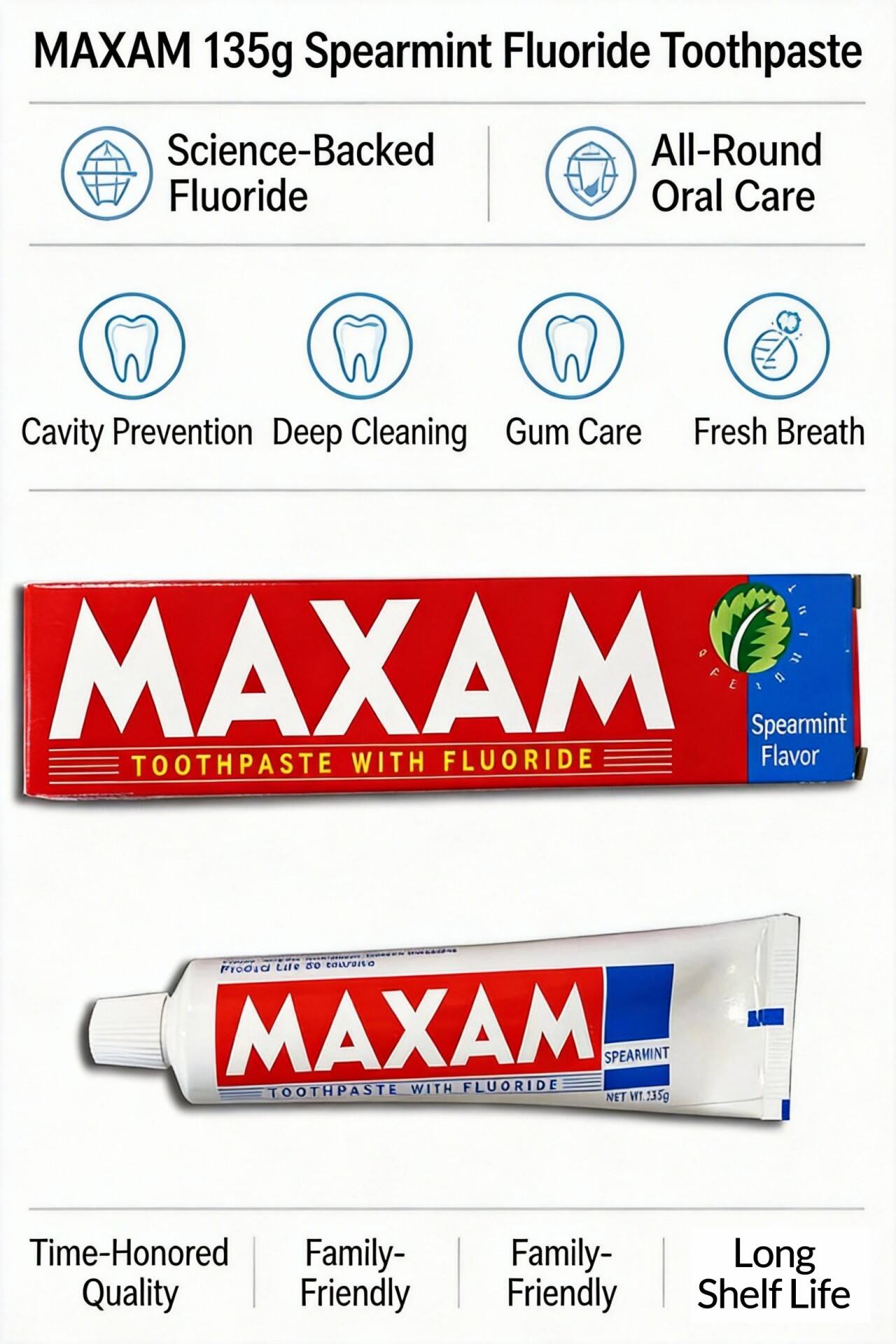
Based in Shanghai with 30+ years of export experience, MAXAM is a premier oral care manufacturer specializing in efficacy-driven toothpaste for whitening, cavity protection, and sensitivity. Certified by GMPC, BRC, and HALAL.
Join our email list for tips and useful information.